
Ebola Outbreak Update
Situation Report May 19, 2026

Less than two weeks ago, I wrote my first post about hantavirus. There are currently 12 cases worldwide, including three deaths. Thirty-six people across the United States have been exposed to hantavirus and are being monitored for symptoms. While the public health risk of hantavirus is currently low, there are some big picture concerns to discuss…
An underfunded and understaffed global public health workforce is working hard to monitor individuals who were exposed, treat those who are ill, contact individuals who may have been exposed, communicate with the public, and control panic globally.
That’s a lot.
Everyone and everything — supplies, resources, expertise — are already stretched thin.
That’s when an Ebola virus outbreak (currently the fourth largest on record) emerges.
Ebola disease is caused by a group of viruses, known as orthoebolaviruses. These are RNA viruses that belong to the Filoviridae family (they look like threadlike fibers under a microscope) that cause viral hemorrhagic fever (think: high fever and internal bleeding).
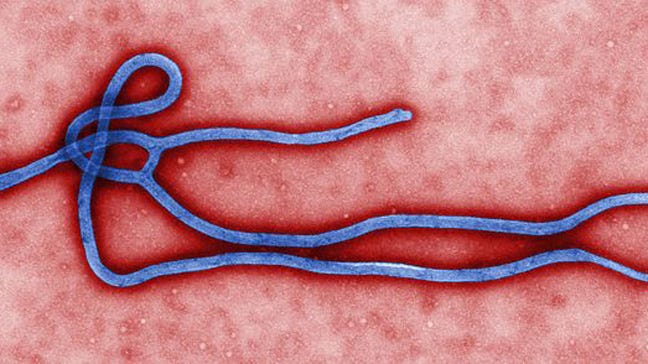
Ebola was first discovered in 1976 along the Ebola River in what was then Zaire (now the Democratic Republic of the Congo (DRC)). We believe the natural reservoir of the virus is the fruit bat. The disease is zoonotic (spread from animal to person), usually through direct contact with the blood, fluids, or organs of an infected animal (think: bat poop). Once a person has the disease, they can spread it to others through bodily fluids — blood, feces, semen, and vomit. The virus can also live on surfaces.
The incubation period ranges from one to three weeks. Individuals usually quarantine for 21 days after they’ve been exposed.
So — why all the news/concern about the current outbreak in the DRC and Uganda?
On May 17 (this past Saturday), the WHO declared the Ebola outbreak in the DRC and Uganda a Public Health Emergency of International Concern. Such a declaration activates a system that provides additional resources, personnel, and funding to address the outbreak. In the past few days, we have learned that there are more than 500 cases and over 100 deaths, including some among healthcare workers. One American, who was in the DRC, has been diagnosed with Ebola; six of his close contacts are being quarantined and monitored for symptoms.
Dr. Anne Ancia, the WHO representative in the DRC, told reporters today —
“We have significant uncertainty about the number of infections and how far the virus has spread.”
A UN official recently stated —
"No one really has a full understanding of how serious this crisis is."
Dr. Craig Spencer, who contracted Ebola during the 2014 outbreak in West Africa, told the Washington Post —
“What has me worried is that we learned way too much, way too quickly, for this to be anything but bad.”
“The healthcare worker deaths raise serious concerns about gaps in infection prevention and control (IPC) and the potential for amplification within health facilities, leading to the wider community.”
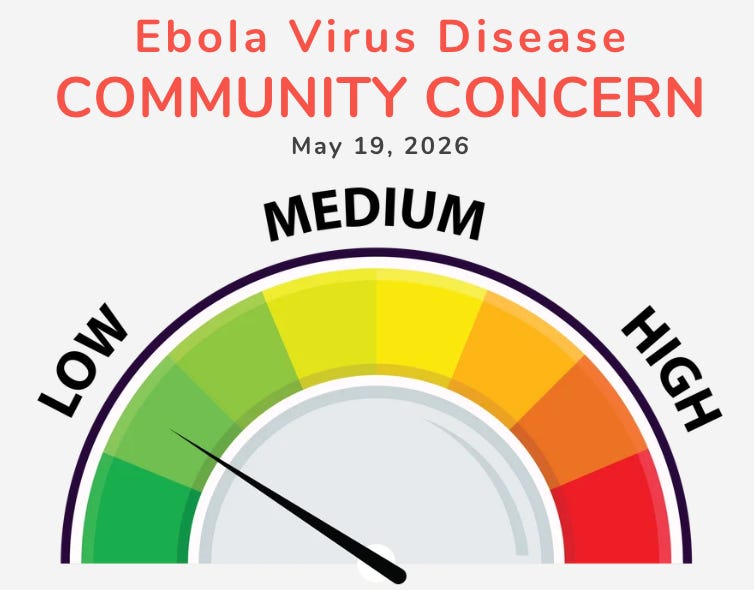
While the number of Ebola cases and deaths will continue to increase in the coming days — the immediate threat of Ebola in the United States is low.
The current outbreak is caused by the Bundibugyo strain of Ebola, which has no known vaccine or effective treatment. And disease spread is being fueled by the fact that there is ongoing political conflict in the affected area, the area is a mining district and workers cross county borders to work in the mines, there is limited access to healthcare facilities in the area, and many individuals live in poverty. Not to mention, there is fear and distrust of medical personnel among individuals throughout the region.
Add to this that USAID workers are no longer working throughout the region and are not providing updates and reports of illness from on the ground.
The number of cases and deaths will likely increase in the days/weeks to come.
We can also expect other countries in Africa to be affected.
On a positive note, the US Department of State has issued $13 million to support increased disease surveillance, expand testing, increase community education, provide safe burial practices (to reduce transmission of disease), and supply medical treatments.
They are also restricting entry into the United States of anyone without a US passport who has been in the DRC, South Sudan, or Uganda in the past 21 days. I would like to note that this type of gatekeeping is NOT an effective disease prevention policy.
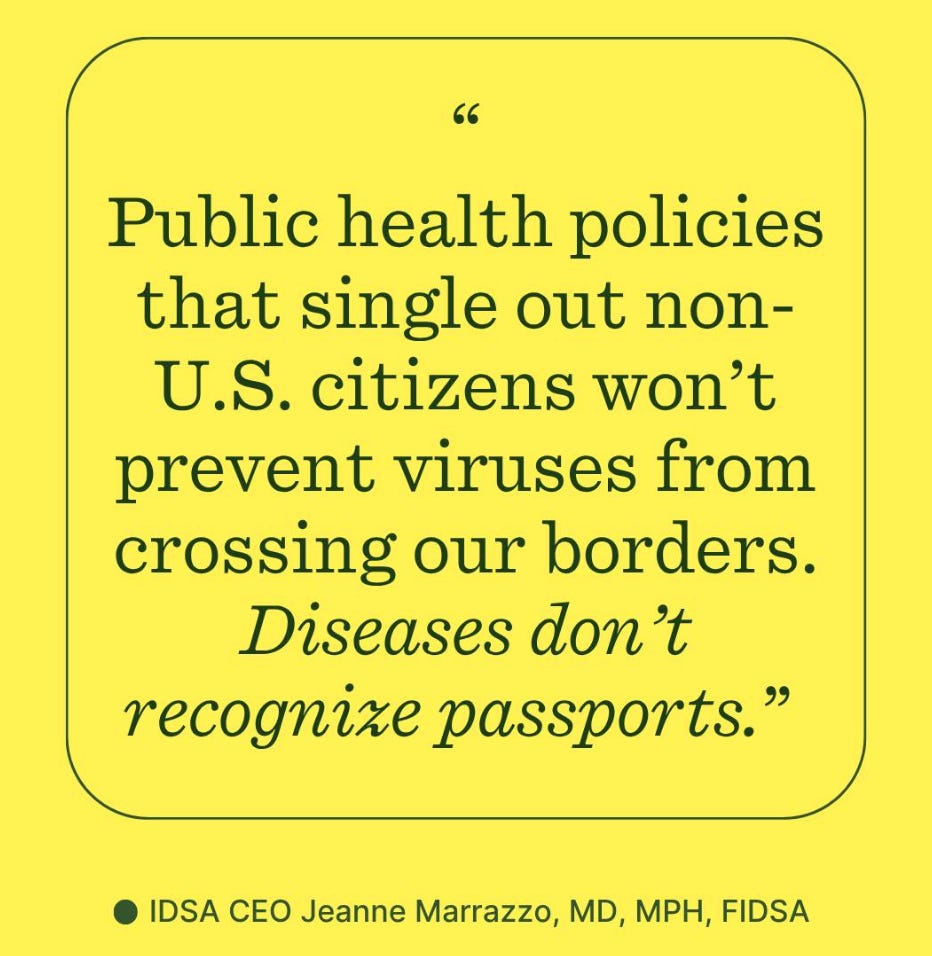
With the current Administration erasing public health — through budget cuts, misinformation, firing employees, and more — our ability to coordinate an outbreak investigation, conduct contact tracing, and work to prevent the further spread of disease is limited. Combine the erasure of public health with public health policies that will not prevent the spread of disease, and we are creating an environment where pathogens can go undetected and uncontrolled. Resulting in more people becoming ill and dying.
This is not how we create healthy communities.
What truly matters is — do we have the systems, people, and communication plans in place to detect and respond to outbreaks quickly?
Information is the intervention.
Hoping this information helps to educate and empower you
to be healthy and create healthy communities.
Please, share this post with your friends and family.
And if you have any additional questions about Ebola, please let me know.
Thanks so much, Becky. Given the fact that we have virtually no reliable information from DHHS, your postings have significant value. Ann
Thank you for the update...